Volt Gelderland on the road: working visits in December
In December, the Volt Gelderland parliamentary party was out and about again. From the Borderland Conference to a visit to Wageningen University and a meeting on intangible heritage: it was all there. You can read a brief review below.
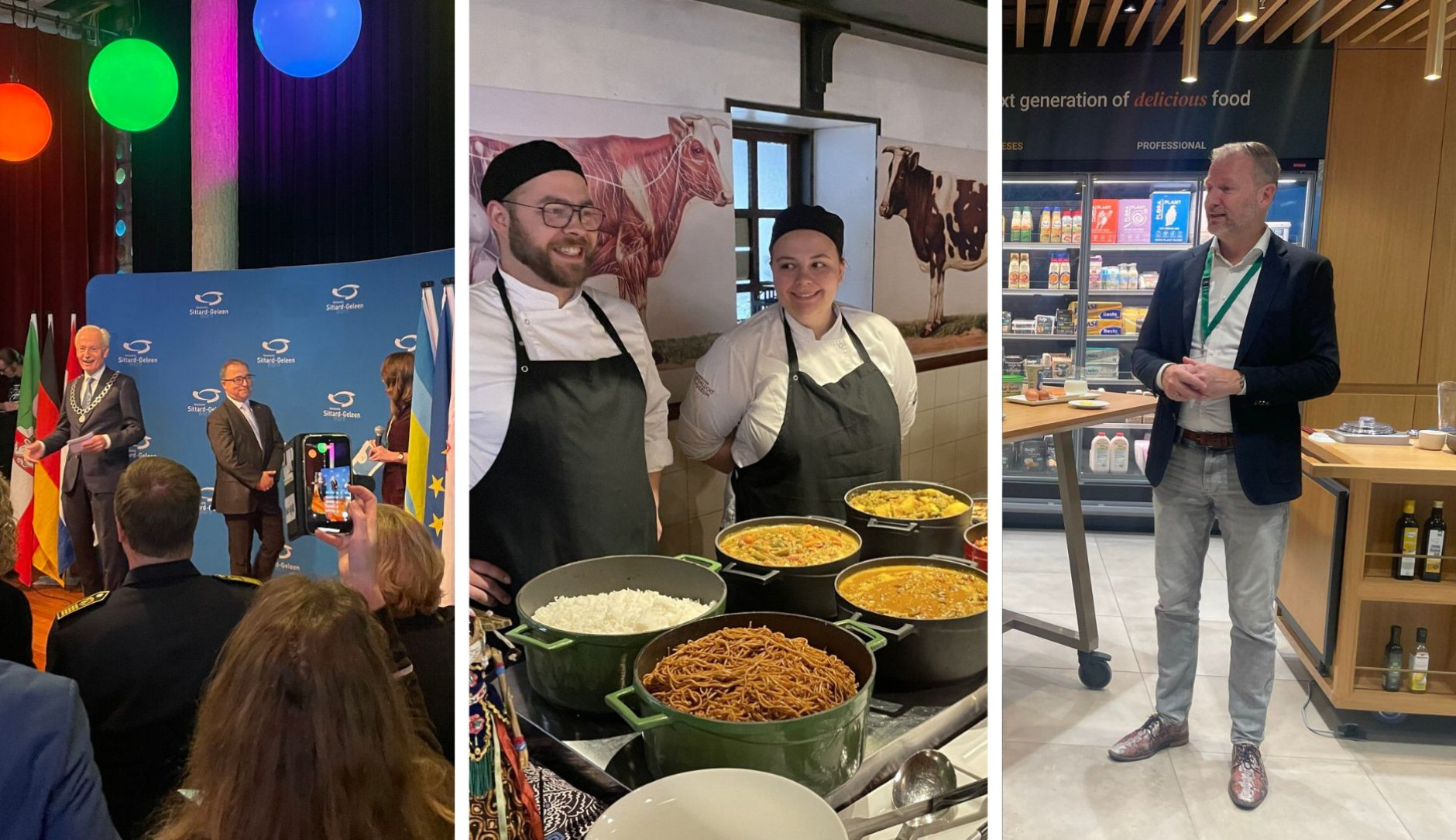
Borderland Conference
How do we ensure that plans for construction, housing and nature on both sides of the border are properly aligned? How do we arrange for a Dutch ambulance to be able to provide rapid assistance in Germany? These kinds of questions are central to the Borderland Conference.
During this conference, administrators from the national government, the border provinces and the German state of North Rhine-Westphalia come together to work on a new Border Region Agenda. Dennis Uenk was present on behalf of the parliamentary party.
This is precisely what Volt wants to fight for: after all, the challenges facing Gelderland do not stop at the provincial border.
By working together with our German neighbours in practical ways, we can make Gelderland stronger, more resilient and more attractive to live and do business in. The border will remain on the map, but through good agreements and joint plans, we will ensure that you feel it less and less. We can therefore look back on a successful and valuable conference.
Working visit to Wageningen University & Research
The parliamentary party paid a working visit to Wageningen University & Research (WUR), where we spoke with the alderman for education and several representatives of the university about the significance of WUR for the region and the role the university plays in the field of innovation and knowledge development.
The discussion was followed by a tour of the campus, with a special focus on the start-ups based there. These companies demonstrate how science and entrepreneurship come together and contribute to solutions for social challenges.
The afternoon concluded with a visit to the Flora Group, which works on dairy-replacing spreads such as margarine: a fine example of innovation for a more sustainable food system.
Gelderland heritage meeting
Finally, at the end of November, various heritage organisations briefed the Gelderland Provincial Council members on intangible heritage. Intangible heritage consists of traditions, rituals, festivities and customs that are passed down from generation to generation. Since 2003, UNESCO has also recognised these forms of heritage as world heritage.
Well-known examples of intangible Gelderland heritage are the fruit parade in Tiel and carbide shooting in the east of the province. Current issues were also discussed during the meeting: foot ferries and small boat trips on canals, both of which are hardly used anymore. These vessels are often run by volunteers, but they will soon have to meet the same training requirements as professional skippers. This could seriously jeopardise the survival of this heritage.
Volt Gelderland believes it is important that rules remain workable and consider local traditions and volunteer initiatives. Heritage deserves protection in a way that does justice to the people who keep it alive.