February review
February was a relatively quiet month for our group, with two working visits that both provided valuable insights. We look back on a Eurobabbel in Suderwick and a visit to Natuurmonumenten about nature conservation and the role of the wolf.
Eurobabbel: the border in practice
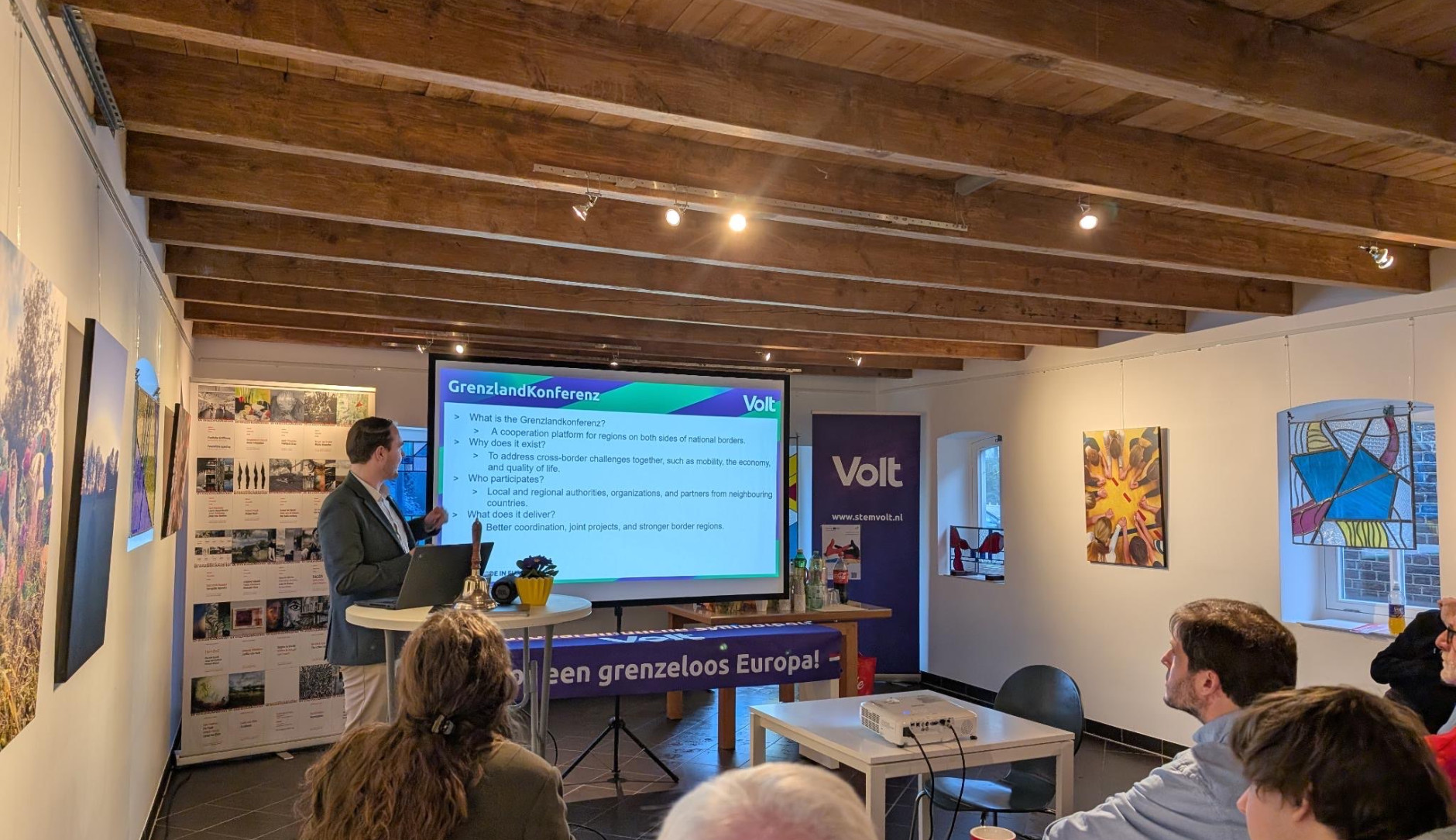
At the end of January, Dennis Uenk traveled to Suderwick on behalf of the group for a Eurobabbel organized by Volt. These meetings are open to everyone and are made possible by the Interreg Germany-Netherlands program, with co-financing from the European Union. The aim of this meeting was to better inform residents on both sides of the border about what the border means in everyday life. And, above all, how we can remove border barriers.
Suderwick (DE) was chosen for a reason. It is located directly next to Dinxperlo (NL) and together they form a single community in practice. This is precisely why you can see how much has already been organized across borders as a matter of course: the police, fire department, and event organizers already work together there. At the same time, it also becomes clear that practice sometimes goes beyond the rules and systems surrounding it.
During the meeting, Dennis spoke about how the province deals with border regions, focusing on topics such as the Border Region Conference and the European Week of Cities and Regions. He also discussed how signals from border regions are picked up in the province. A concrete example of this is the German-Dutch Spatial Planning Committee (RO), in which spatial developments across the border are coordinated. Think, for example, of the coordination around wind turbines that are planned right on the border.
Towards fewer barriers and more cooperation, so that the border becomes as connected in policy as it is in everyday life.
On the road together
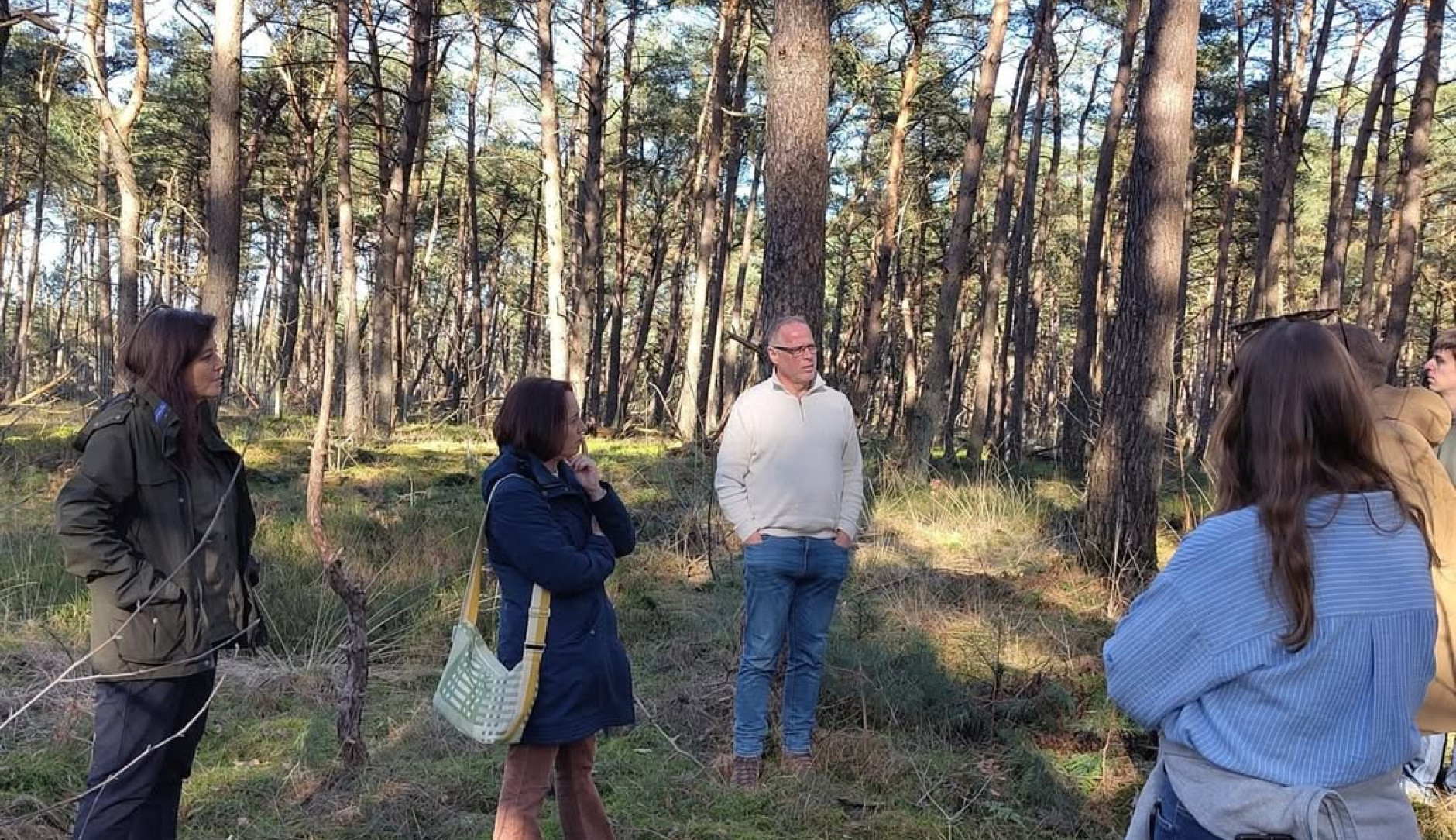
Nature conservation requires consultation and cooperation. That is why we went on a working visit to Natuurmonumenten together with the Party for the Animals and 50PLUS.
We discussed the return of the wolf. In areas where wolves live, the culling of animals such as wild boar and deer is being phased out as a pilot project, so that nature can finally take its course again. The wolf is a better predator than humans because it attacks the weaker animals, thereby keeping populations healthy.
Wolves play a crucial role in the ecosystem. Because prey animals eat fewer young trees, forest regeneration has a chance again. In this way, the wolf helps to restore biodiversity, something that has been thwarted for years by human intervention.